

Corporate gifting was never supposed to be about products
Somewhere along the way, corporate gifting became a procurement exercise. Companies compare catalogues. Shortlist vendors. Negotiate prices. Approve samples. Print logos. Ship boxes.
Everything works exactly as planned.
Except the one thing the gift was supposed to do.
Build a stronger relationship.
We don’t think the problem is that companies have stopped caring for employees, clients, and team members.
We think the industry has optimized for ordering products instead of creating memorable moments.
At the same time, businesses that want something more thoughtful often encounter a different challenge.
Authentic craftsmanship can be difficult to source consistently at corporate scale, making reliability feel uncertain even when the products themselves are exceptional.
We don’t believe companies should have to choose between these two extremes.

Gift Katha exists because we believe corporate gifting can be both meaningful and dependable.
The Gaps in Corporate Gifting
Gap 1: Companies are forced to choose between meaning and reliability
The corporate gifting market has largely evolved into two distinct categories.
On one side are conventional corporate gifting suppliers. They offer standardized products, efficient ordering systems, predictable timelines, and procurement-friendly processes. From an operational perspective, these vendors solve many of the challenges businesses face.
However, the gifts themselves often feel interchangeable.
Recipients have seen the same kinds of corporate gifts countless times. While they may be useful, they rarely create memorable experiences or meaningful connections. They communicate that a gift was sent, but not necessarily why it was chosen.
On the other side are businesses built around genuine craftsmanship.
Their work is often distinctive, beautifully made, and full of character. These products naturally carry a sense of individuality that mass manufacturing cannot easily replicate.
Yet many of these businesses are designed for individual consumers rather than large organizations. Scaling production, maintaining consistency, coordinating delivery schedules, and supporting corporate procurement requirements can become difficult as order sizes increase.
This leaves companies facing a choice they shouldn’t have to make.
- Do they prioritize operational certainty and sacrifice uniqueness?
- Or do they prioritize craftsmanship while accepting uncertainty?
We believe neither option is good enough.
Gap 2: Authentic craftsmanship and corporate procurement rarely work together
Large organizations don’t simply purchase gifts.
They manage projects.
Every order must move through approvals, purchasing processes, finance teams, delivery schedules, and internal stakeholders.
Reliability isn’t simply a preference.
It’s an operational necessity.
A delayed order affects onboarding programmes, festive celebrations, employee recognition initiatives, client events, and carefully planned business activities.
Unfortunately, genuine craftsmanship has often been viewed as incompatible with these expectations.
Not because artisans lack skill, but because traditional craft ecosystems weren’t designed around corporate procurement systems.
Gap 3: Too much corporate gifting is quickly forgotten
Businesses invest in gifting because they want to strengthen relationships.
Employees should feel valued.
Clients should remember the partnership.
Business relationships should become stronger through thoughtful gestures.
Yet many corporate gifts fail to achieve these outcomes because they look and feel remarkably similar.
When every organization gives nearly identical promotional merchandise, the experience becomes transactional rather than memorable.
The budget may be significant. The emotional impact often isn’t.
Gap 4: Expectations around responsible business have changed
Businesses today are increasingly expected to think beyond price and convenience.
Customers, employees, investors, and stakeholders all pay greater attention to how organizations make purchasing decisions and who they choose to work with.
Environmental responsibility, responsible sourcing, support for local communities, and broader ESG commitments have become important considerations for many organizations.
The challenge is that these values are often difficult to translate into practical procurement decisions.
Companies want suppliers whose business practices align with their own values, but they also need those suppliers to deliver consistently and operate professionally.
The people behind craftsmanship often disappear
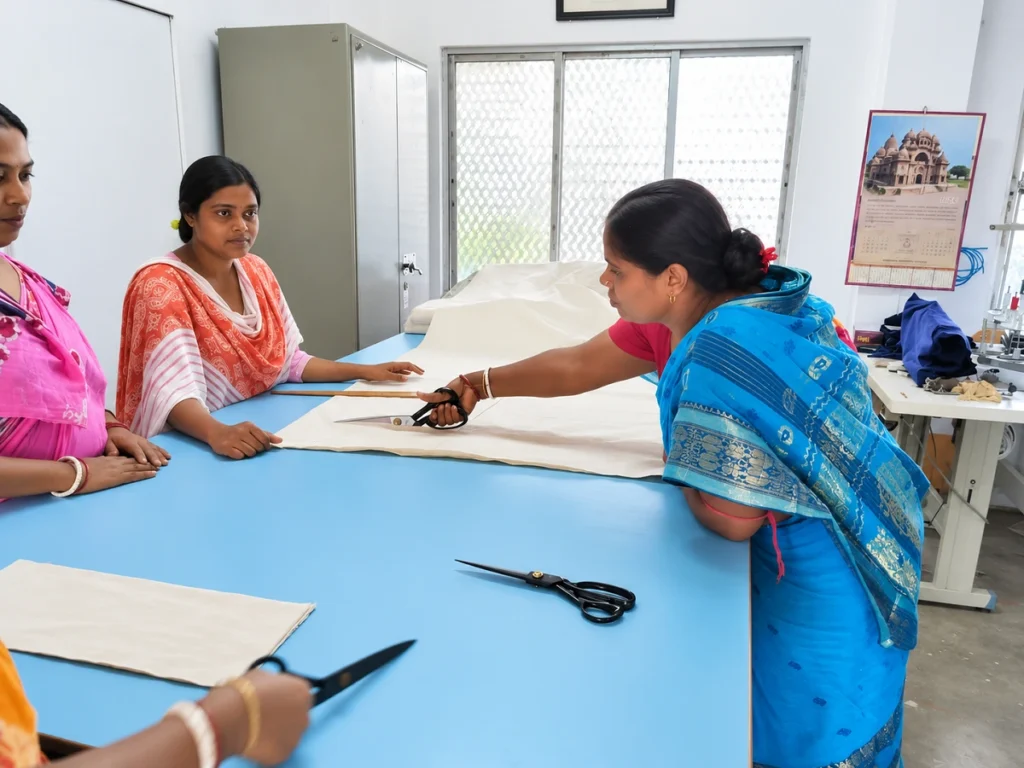
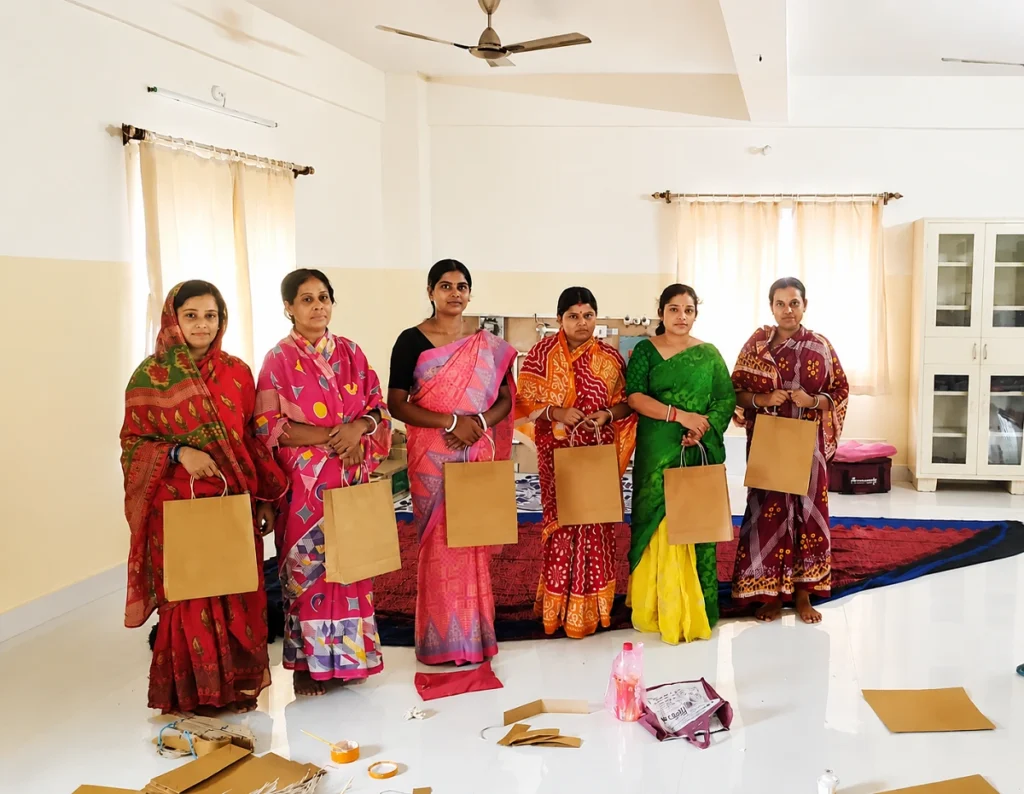
Every handcrafted object begins with knowledge developed over years of practice.
Skills are passed between generations, refined through experience, and sustained through continuous work.
Yet in many supply chains, those stories disappear before the product reaches the recipient. The craftsmanship remains.
The human connection does not. As a result, corporate gifts lose part of what makes them meaningful.
How Gift Katha Closes These Gaps
We believe businesses deserve both reliability and authenticity
Our starting point is simple: Companies should never have to choose between operational confidence and meaningful gifting.
Reliable delivery, consistent quality, professional communication, and procurement-friendly processes should be the standard—not the differentiator.
Likewise, authenticity shouldn’t become a luxury available only when businesses are willing to accept uncertainty.
Our approach is built around bringing these two worlds together.
Rather than treating reliability and craftsmanship as competing priorities, we see them as complementary strengths.
Businesses deserve gifts that reflect care without creating operational complexity.
We build systems that allow craftsmanship to scale responsibly
Exceptional craftsmanship alone doesn’t automatically create a dependable corporate gifting experience.
Professional operations require planning, coordination, quality management, communication, and accountability.
Gift Katha exists to provide that operational foundation.
We focus on creating processes that support consistency without removing the individuality that makes handcrafted work valuable.
The objective isn’t to industrialize craftsmanship.
It’s to build professional systems around it so organizations can confidently choose authentic work without introducing unnecessary risk into their procurement process.
In our view, reliability should strengthen craftsmanship rather than replace it.
We believe gifting should strengthen relationships
A corporate gift should represent more than a completed transaction.
- It should communicate appreciation.
- It should reflect thoughtfulness.
- It should reinforce the relationship between the company giving the gift and the person receiving it.
That doesn’t happen through branding alone.
It happens when a gift feels intentional.
When recipients recognize care behind the decision, the experience becomes more meaningful.
Our approach focuses on helping businesses create those moments rather than simply fulfilling purchasing requirements.
Because the value of a gift isn’t measured by the day it’s delivered. It’s measured by how long it’s remembered.
We believe responsible sourcing should be part of everyday business
Supporting local craftsmanship and more responsible production shouldn’t exist as separate initiatives disconnected from everyday business decisions.
They should simply be part of how business is done.
Our approach reflects that philosophy.
We don’t position responsible sourcing as a charitable act or an emotional appeal.
Instead, we see it as a practical business decision that aligns quality, authenticity, and long-term value.
Organizations that already care about thoughtful purchasing deserve partners whose operating model naturally reflects those priorities.
We believe trust is earned through consistency
Every successful business relationship depends on trust.
Corporate buyers need confidence that commitments will be honoured, communication will remain clear, and expectations will be met.
Our approach prioritizes transparency, accountability, and long-term relationships over short-term transactions. We believe companies should know exactly what to expect when they work with us, because predictability builds confidence, and confidence builds lasting partnerships.
Our Philosophy
Everything we do begins with one belief:
Every gift tells a katha. A meaningful gift should never require businesses to compromise on reliability.
Likewise, dependable operations should never require businesses to settle for gifts that feel generic or forgettable. We believe →
- Thoughtful gifting begins by respecting both the people receiving the gift and the people involved in creating it.
- Responsible sourcing becomes meaningful when it is embedded into everyday business rather than presented as a marketing message.
- Craftsmanship deserves professional operations that allow it to thrive within modern corporate environments.
Most importantly, we believe companies deserve gifting partners who understand that relationships are built through both thoughtful choices and dependable execution. That belief shapes every decision we make.
Because in the end, corporate gifting isn’t about simply delivering something on time. It’s about delivering something worth remembering.
Hi, this is a comment.
To get started with moderating, editing, and deleting comments, please visit the Comments screen in the dashboard.
Commenter avatars come from Gravatar.